
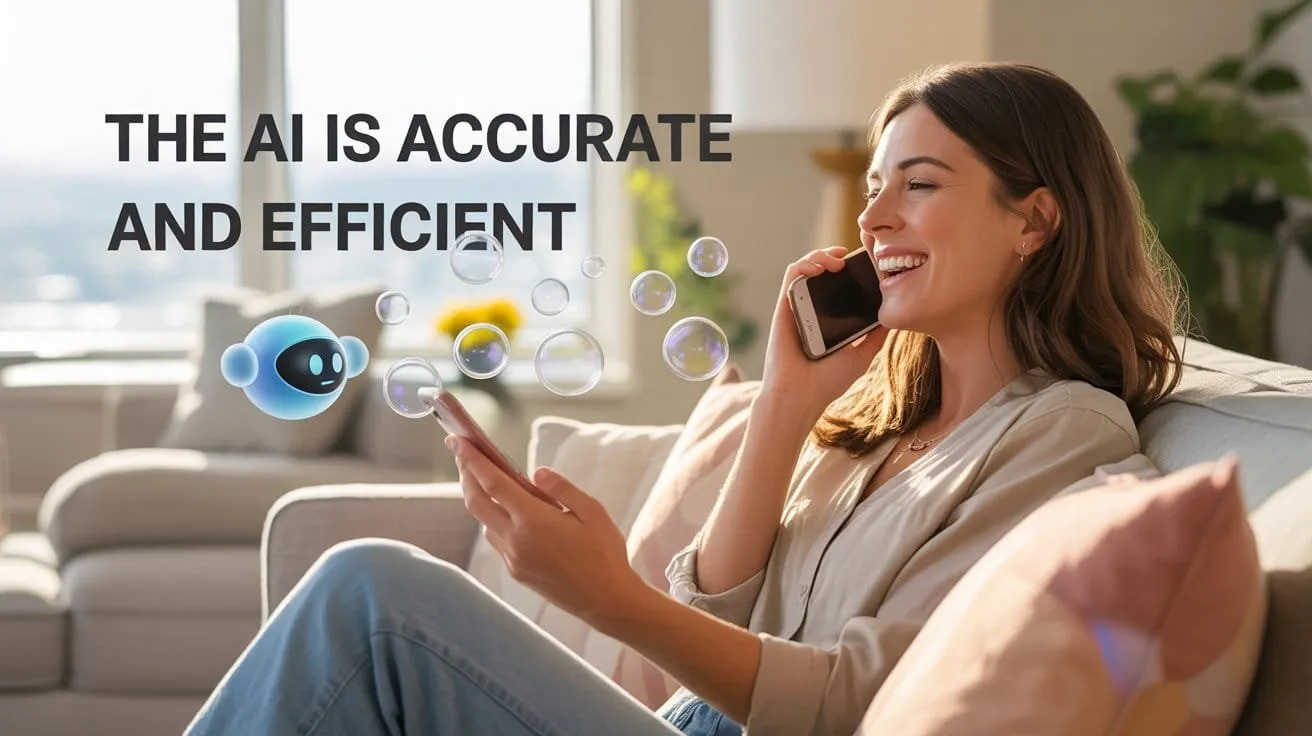
Automated phone support has long carried a bad reputation. Consumers have spent years battling clunky interactive voice response (IVR) systems, pressing endless buttons, and repeating themselves just to reach a human. The frustration is real, and for good reason. But here’s the reality: automated phone support is changing fast, and whether people realize it or not, most consumers will start preferring it over talking to a person. Poly Service Pros has witnessed these challenges firsthand.
Why automation earned its bad reputation
Before diving into why automation is on track to become the preferred choice, it’s worth acknowledging why it’s had such a rocky past. The older generation of automated systems relied on:
- Touch-tone inputs (DTMF menus) — the dreaded “Press 1 for this, Press 2 for that” that often led to dead ends.
- Rule-based responses — limited ability to understand natural speech, requiring exact phrasing.
- On-premise infrastructure — difficult to design, implement, and update; these outdated systems couldn’t keep up.
- Minimal integration with business tools — callers often had to start from scratch if they eventually reached a human, repeating their whole issue.
These shortcomings created the widespread belief that automated phone support was a necessary evil — something businesses used to cut costs rather than improve service. But the technology has changed dramatically.
Today’s AI voice agents are nothing like old IVR
Thanks to advancements in artificial intelligence, speech processing, and cloud computing, modern voice agents are:
- Conversational — Speech-to-Text (STT) and Natural Language Processing (NLP) let them understand callers in normal, everyday language.
- Smart — Large Language Models (LLMs) let them determine intent, provide relevant responses, and adjust based on the conversation’s context.
- Human-like — Text-to-Speech (TTS) has come a long way. Instead of robotic, monotone voices, AI speech now sounds natural and engaging.
- Integrated — they connect with CRMs and business tools via APIs, so they can log interactions, pass on messages, and keep businesses informed in real time.
- Adaptive — using Retrieval-Augmented Generation (RAG), they can pull real-time business data and give up-to-date responses rather than pre-scripted answers.
These improvements already make automated systems far more efficient than their human counterparts in certain scenarios. But technology alone isn’t what will drive mass adoption — consumer behavior is shifting too.
Tech-savvy consumers expect fast, digital solutions
Older generations were raised in a world where speaking to a human was the standard. Younger consumers grew up with self-service technology.
- Millennials and Gen Z have spent their lives using texting, apps, and chat-based support as their primary means of communication.
- They don’t want to wait on hold — they expect instant responses.
- They already prefer automation in many cases (self-checkout, online reservations, chatbots).
For these younger consumers, human interaction isn’t the default — it’s the backup. If an automated system resolves their issue efficiently, they have no reason to prefer a live agent.
AI and speech tech are still early
Another reason automation will take over? It’s still evolving — and getting better every day.
- STT and NLP advancements mean AI will keep understanding speech more accurately, even with accents or background noise.
- LLMs will keep improving, making automated conversations smoother and more intuitive.
- TTS voices will continue to sound more human, eliminating the robotic tone that turns some people off.
- Integration with business systems will deepen, letting AI handle more tasks seamlessly.
As AI-powered phone support improves, the gap between automated and human service will shrink — until there’s almost no difference at all.
It’s happening naturally
The shift toward automation isn’t being forced; it’s happening naturally. Businesses adopt AI-powered phone support because it’s cheaper, faster, and more consistent — but consumers will accept, and even prefer, it because:
- They’re getting answers faster.
- They don’t have to wait on hold.
- They can interact on their own terms.
Over time, just like online banking, self-checkout, and digital assistants, automated phone support is becoming the standard, not the exception.
Final thoughts
For years, automated phone support was seen and used as a cost-cutting measure, not a customer-service improvement. But thanks to rapid advancements in AI, speech processing, and a new generation of tech-comfortable consumers, that reality is changing. We’re approaching a future where people will prefer AI-driven support — not because they’re forced to, but because it’s the better experience. For small businesses, adopting modern phone automation isn’t just an efficiency move; it’s a way to stay ahead of shifting expectations.
Poly Service Pros helps small service businesses embrace this future with AI-powered voicebots that enhance customer communication, qualify leads, and integrate with existing systems — so home service companies can deliver faster support without the overhead. If you’re ready to modernize your customer service, we’re here to help.